Evaluating Ui Game Assets: Vector Formats, Workflow Integration, and Practical Alternatives
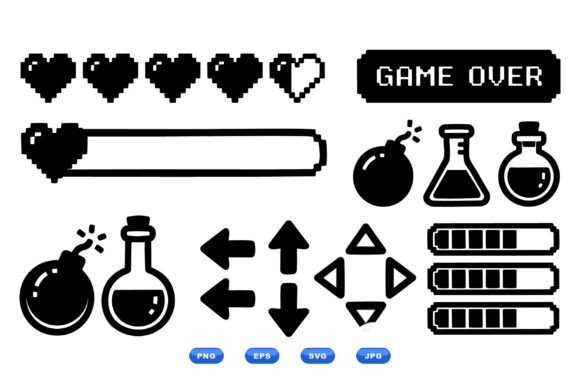
When sourcing interface elements for game development or interactive media, the technical composition of an asset pack is often just as critical as its visual style. The Ui Game resource distinguishes itself through a specific multi-format delivery system that includes AI, EPS, JPEG, and PNG files. This combination targets a distinct segment of the design workflow: professionals who require both immediate implementation assets and long-term editability. Understanding the value of this package requires looking beyond the aesthetic preview and evaluating how these specific file types interact with modern game engines, vector editing software, and UI scaling requirements.
For developers and designers aged 20 to 50 who are managing production pipelines, the decision to acquire Ui Game should be based on workflow compatibility rather than visual appeal alone. While many marketplaces offer static image packs, the inclusion of source vectors (AI and EPS) alongside raster exports (JPEG and PNG) positions this resource as a hybrid solution. It serves teams that need to customize branding or adjust layouts without recreating assets from scratch, while also providing ready-to-use textures for rapid prototyping. However, this versatility comes with tradeoffs regarding file management and software dependencies that must be weighed against simpler, single-format alternatives.
The Strategic Value of Multi-Format Delivery
The primary differentiator of Ui Game is the coexistence of editable source files and production-ready rasters. In many asset ecosystems, creators are forced to choose between convenience and flexibility. Raster-only packs allow for instant drag-and-drop functionality in engines like Unity or Godot but become obsolete the moment a button needs to be resized or recolored. Conversely, vector-only packs offer infinite scalability but require significant processing time to export usable textures for runtime environments.
By providing AI and EPS files, Ui Game ensures that the assets remain future-proof. Adobe Illustrator (AI) and Encapsulated PostScript (EPS) are industry standards for vector graphics. This allows designers to modify anchor points, adjust color palettes to match specific brand guidelines, or alter typography without degradation. For example, if a project pivots from a dark theme to a light theme during development, having the source vectors means the entire UI kit can be updated globally in minutes rather than days. The EPS format specifically adds a layer of interoperability for teams using CorelDRAW or open-source alternatives like Inkscape, reducing vendor lock-in compared to proprietary formats.
Simultaneously, the inclusion of JPEG and PNG files addresses the immediate needs of programmers and level designers who may not have access to or proficiency in vector software. PNGs provide necessary transparency for overlaying HUD elements, while JPEGs offer compressed backgrounds that manage memory budgets more effectively. This dual-layer approach supports cross-functional teams where artists iterate on the source files while developers implement the exported rasters in parallel.
Comparing Ui Game Against Single-Format Alternatives
To make an informed purchasing decision, it is necessary to compare Ui Game against other common categories of UI resources. The market generally segments into three buckets: pure raster packs, native engine UI kits, and comprehensive vector suites.
Raster-Only Asset Packs
Standard PNG/JPG packs are typically lower cost and require zero learning curve. They are ideal for hobbyists, game jam participants, or projects with fixed resolutions where UI scaling is not a concern. However, they lack the adaptability of Ui Game. If your target platform changes from mobile to desktop, raster assets often become pixelated or require complete replacement. Ui Game is the superior choice for commercial projects anticipating multi-platform releases or post-launch updates, whereas raster-only packs are better suited for disposable or fixed-scope prototypes.
Native Engine UI Systems
Some resources come pre-configured as Unity prefabs or Unreal Blueprints. These offer tighter integration and built-in animation logic, which Ui Game does not provide out-of-the-box. If your priority is reducing coding time and you are committed to a specific engine ecosystem, native kits may offer faster initial velocity. However, they often sacrifice artistic control; modifying the underlying visuals usually requires extracting textures and editing them externally anyway. Ui Game offers greater artistic freedom and engine agnosticism, making it preferable for custom engines, web-based games, or teams that prioritize unique visual identity over plug-and-play convenience.
Figma and Sketch Resources
Modern UI design has largely migrated to tools like Figma. A potential limitation of Ui Game is its reliance on legacy vector formats (AI/EPS) rather than native Figma or Sketch files. Teams deeply embedded in collaborative cloud workflows may find importing EPS files into Figma results in lost layer structure or incompatible effects. If your team’s single source of truth is exclusively Figma, you must verify that the AI/EPS conversion process preserves the editability you require. Ui Game remains highly relevant for traditional Adobe-centric workflows or print-to-digital pipelines, but may introduce friction for purely digital product design teams.
Assessing Technical Tradeoffs and Limitations
While the format diversity of Ui Game is a strength, it introduces specific considerations that buyers must evaluate. Recognizing these limitations prevents frustration during production.
- Software Dependency: Full utilization of the AI and EPS files requires licensed vector editing software. Teams relying solely on free tools like GIMP or Krita will only benefit from the raster components, effectively negating half the product's value.
- File Organization Overhead: Managing four distinct file types per asset increases storage requirements and organizational complexity. Establishing a strict naming convention and folder hierarchy is essential to prevent version conflicts between source files and exported textures.
- Vector Complexity: Not all game UI styles translate cleanly to vectors. Highly textured, painterly, or grunge-style interfaces often lose fidelity when converted to EPS. Ui Game is best evaluated for flat, semi-flat, or stylized vector aesthetics. If your project requires photorealistic wear and tear, the vector components may serve only as layout guides rather than final art sources.
- Export Pipeline Setup: Unlike native engine assets, Ui Game requires you to build your own export pipeline. You must determine optimal resolution scales, compression settings, and atlas packing strategies. This upfront investment pays off in customization but delays immediate usability compared to pre-packaged solutions.
Determining Fit: When to Choose Ui Game
The decision to integrate Ui Game into your resource library should align with specific project parameters and team capabilities. Based on comparative analysis, this asset collection is most appropriate under the following conditions:
- Long-Term Product Maintenance: Projects expected to undergo multiple iterations, seasonal events, or rebranding efforts benefit significantly from the editable source files. The ability to tweak existing assets extends the lifespan of the purchase.
- Multi-Resolution Targeting: Games targeting both mobile devices and 4K displays require scalable assets. The vector foundation of Ui Game ensures crisp rendering across all DPI settings without maintaining multiple redundant texture sets.
- Custom Engine Development: Teams building proprietary technology or working outside mainstream ecosystems cannot rely on marketplace-specific UI kits. Format-agnostic vectors and standard rasters provide the universal compatibility needed for bespoke tech stacks.
- Hybrid Art Teams: Studios with dedicated concept artists who work in Adobe Suite and technical artists who handle implementation will find the format split mirrors their natural handoff points.
Conversely, readers should consider alternative options if their project is a short-term prototype with no planned updates, if the team lacks vector editing expertise, or if the required aesthetic is fundamentally incompatible with vector representation. Additionally, teams strictly adhering to Figma-based design systems should test EPS import fidelity before committing, as the conversion friction may outweigh the benefits of traditional vector formats.
Practical Evaluation Checklist
Before acquiring Ui Game or similar multi-format resources, conduct a brief technical audit to ensure alignment with your production environment:
- Verify Software Compatibility: Confirm your current version of Illustrator or CorelDRAW opens the provided AI/EPS files without missing fonts or broken links.
- Test Export Quality: Import a sample EPS into your game engine via your intended pipeline. Check for alpha channel integrity, edge artifacts, and color space accuracy.
- Audit Layer Structure: Open the source files to assess organization. Well-structured layers with semantic naming reduce customization time; merged or unnamed layers diminish the value of editable formats.
- Compare Licensing Terms: Ensure the license covers your intended use case, particularly regarding modification of source files and redistribution of derived assets within a commercial product.
Ultimately, Ui Game represents a professional-grade approach to UI asset distribution that prioritizes flexibility and longevity over instant gratification. Its value proposition lies in bridging the gap between creative iteration and technical implementation. By understanding the specific roles of AI, EPS, JPEG, and PNG formats within your unique workflow, you can determine whether this comprehensive approach aligns with your project’s strategic needs or whether a more specialized alternative would serve you better. The right choice depends not on which asset pack is universally superior, but on which format ecosystem reduces friction for your specific team and production timeline.