Empty Billiard Table Vector: Evaluating the Green Game Asset for Professional Design
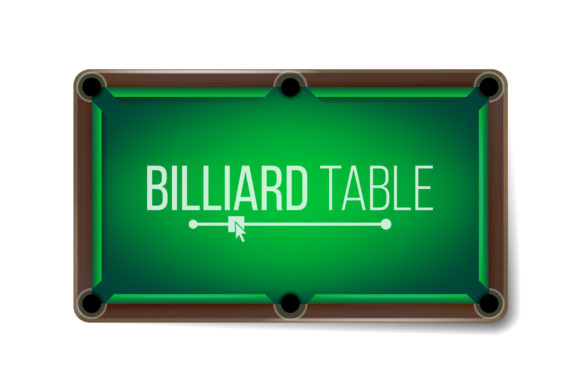
In the realm of commercial graphic design and digital publishing, sourcing high-quality, thematic imagery that balances aesthetic appeal with functional utility is a constant challenge. The Empty Billiard Table Vector (Green Game) represents a specific niche within sports illustration that serves a distinct purpose beyond mere decoration. Unlike photographs of active pool games or cluttered bar scenes, this asset focuses on the pristine, unoccupied state of an American pool table rendered in a realistic vector style. For professionals ranging from marketing directors to freelance illustrators, understanding the technical and practical value of this specific top-view, isolated illustration is essential for determining its fit within a broader creative workflow.
This asset is defined by its clean geometry and versatile format availability, typically offered in both JPG and EPS. While the JPG provides immediate usability for web layouts and mockups, the EPS file unlocks the true potential of vector graphics. The "Green Game" designation refers not only to the traditional felt color but also to the classic visual association with regulation play. By isolating the table on a white background and utilizing a strict top-down perspective, the illustration removes contextual noise, allowing designers to integrate it seamlessly into diverse projects without battling complex masking or color correction issues.
Technical Composition and Visual Accuracy
The primary strength of a realistic billiard table vector lies in its adherence to geometric precision. Pool tables are symmetrical objects governed by strict manufacturing standards, and any deviation in perspective or proportion is immediately noticeable to enthusiasts and professionals alike. A high-quality Empty Billiard Table Vector maintains accurate ratios between the rails, pockets, and playing surface. The top-view orientation eliminates vanishing point distortion, making it significantly easier to overlay text, logos, or UI elements directly onto the felt area. This orthographic approach transforms the table from a background object into a functional canvas.
Realism in vector art is achieved through gradient meshes and careful shading rather than photographic texture. When evaluating this asset, one should look for subtle lighting cues that suggest the depth of the pockets and the sheen of the wooden rails without relying on raster effects that degrade upon scaling. The green felt should possess enough tonal variation to appear tactile while remaining flat enough to serve as a neutral backdrop. This balance is critical; if the vector is too stylized, it loses authority; if it attempts to mimic photo-realism too aggressively, it risks looking artificial at large sizes. The best iterations of this asset use color theory to imply material quality through smooth transitions and consistent light sources.
Practical Applications in Commercial and Editorial Design
The utility of an isolated American pool table extends across multiple verticals. In editorial contexts, such as articles discussing game theory, leisure economics, or sports psychology, the empty table serves as a powerful metaphor. It represents potential, strategy, or the calm before competition, avoiding the cliché of action shots that can distract from serious textual content. For publishers and bloggers targeting adult demographics, this sophisticated, static imagery aligns better with analytical or narrative writing than dynamic photography often does.
In commercial marketing, particularly for hospitality, event planning, or gaming apps, the Empty Billiard Table Vector functions as an excellent staging ground. Because the surface is uncluttered, marketers can digitally place promotional items, tournament brackets, or branded merchandise onto the felt using standard design software. The isolation on white facilitates rapid compositing into brochures, social media ads, or website headers. Furthermore, the vector nature allows for color customization; a brand requiring a blue or red table to match corporate identity can modify the fill colors in minutes, provided the EPS file is properly layered. This adaptability offers significant cost savings compared to commissioning custom 3D renders or organizing a photoshoot.
Format Versatility: Leveraging JPG and EPS Files
Understanding the distinction between the delivered formats is crucial for maximizing return on investment. The JPG version is optimized for speed and compatibility. It is ideal for low-fidelity wireframing, client presentations, or direct insertion into word processing documents and basic web layouts. However, it is a static endpoint. Once placed, the resolution is fixed, and editing capabilities are limited to cropping and basic color grading.
The EPS (Encapsulated PostScript) format is where the long-term value resides. As a vector container, it stores mathematical paths rather than pixels. This means the Empty Billiard Table Vector can be scaled to billboard size or reduced to icon dimensions without any loss of fidelity. More importantly, the EPS format preserves editability. Professional designers can deconstruct the illustration to adjust rail widths, modify pocket shapes, or separate the shadow layer from the table body. This structural access is vital for creating derivative assets, such as matching side views or cropped details for app interfaces. When acquiring this asset, verifying that the EPS contains organized layers and editable anchor points is a necessary quality control step.
Evaluating Quality and Usability Constraints
Not all vector illustrations are created equal, and the market contains many subpar examples. When assessing a Realistic Billiard Table Vector, scrutiny should be applied to the path complexity. Poorly constructed vectors often contain thousands of unnecessary anchor points, resulting in bloated file sizes and sluggish performance in Adobe Illustrator or CorelDRAW. A professionally crafted asset uses efficient bezier curves to define organic shapes like pocket openings and rail cushions. Excessive node count is often a sign of auto-tracing from a photograph rather than intentional hand-drawn vectorization.
Another consideration is the accuracy of the "American" specification. American pool tables differ structurally from British snooker or pyramid tables. They feature larger pockets, different cushion profiles, and specific marking spots. Using a generic or incorrectly styled table in a project targeting knowledgeable hobbyists or venue owners can undermine credibility. Ensure the illustration reflects the correct six-pocket configuration and proportional rail width associated with American regulation play. Additionally, check the licensing terms carefully. While the asset may be visually perfect, restrictions on commercial use, modification, or redistribution can render it useless for agency work or product packaging.
Audience Fit and Strategic Integration
This asset is most valuable to creators who require consistency and scalability over photographic authenticity. Freelancers building portfolio pieces for sports brands will find the clean lines and professional finish superior to stock photos with inconsistent lighting. Educators developing curriculum materials on geometry or physics can use the top-view layout to demonstrate angles and trajectories clearly. Small business owners in the entertainment sector can utilize the vector for signage, menus, and flyers without hiring a designer for every minor update.
However, there are limitations. If the project demands gritty atmosphere, environmental storytelling, or human emotion, this sterile, isolated illustration will fall short. It is a tool for structure and symbolism, not mood. Similarly, users unfamiliar with vector editing software may struggle to exploit the EPS benefits, relegating them to JPG usage. For those committed to integrating this asset effectively, investing time in learning basic vector manipulation yields exponential returns. The ability to recolor, resize, and repurpose the Empty Billiard Table Vector transforms a single purchase into a comprehensive design system component.
Long-Term Value in Digital Asset Libraries
Trends in sports graphics cycle rapidly, but the fundamental geometry of a billiard table remains constant. Unlike trendy 3D renders or stylized cartoons that date quickly, a realistic, well-executed vector possesses timeless utility. Building a library with foundational assets like the Green Game table ensures that future projects have a reliable starting point. The initial evaluation should focus less on current aesthetic trends and more on technical robustness and versatility. An asset that integrates smoothly into existing workflows, supports multiple output formats, and withstands rigorous editing sessions ultimately delivers higher ROI than cheaper, less flexible alternatives.
Ultimately, the decision to utilize an Empty Billiard Table Vector should be driven by project requirements rather than novelty. When the goal is clarity, customization, and professional presentation within the American pool theme, this specific type of illustration offers a pragmatic solution. By prioritizing technical quality, format flexibility, and contextual appropriateness, professionals can leverage this asset to enhance communication, streamline production, and maintain visual consistency across diverse media platforms. The value lies not just in the image itself, but in the efficiency and creative freedom it affords the user.