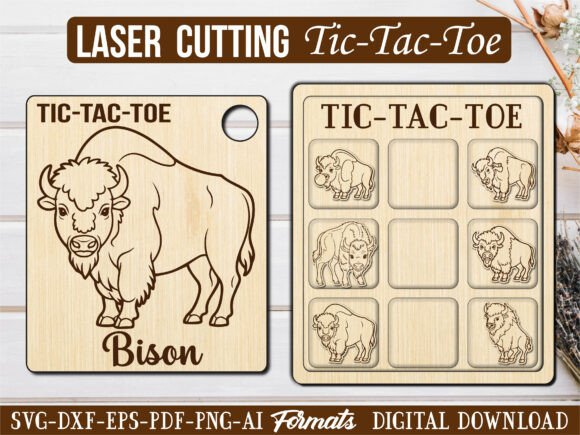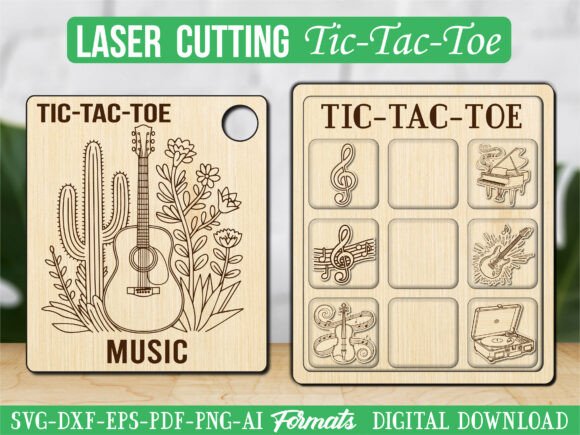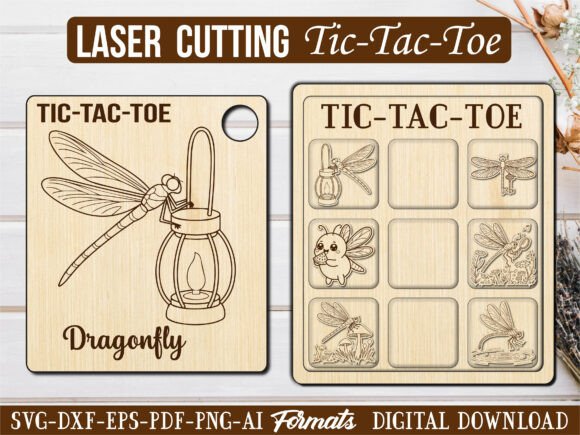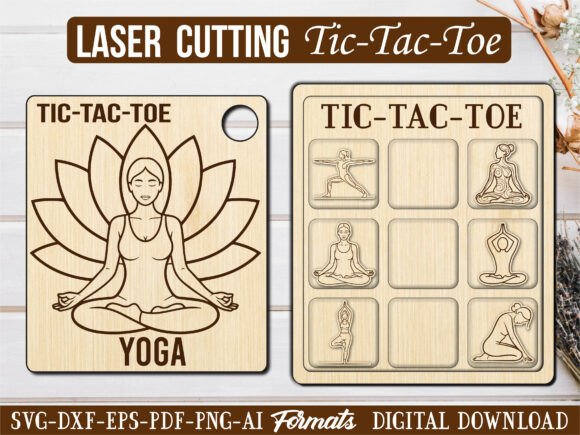
Hunting Deer Tic Tac Toe Puzzle Game SVG: A Comprehensive Guide to Laser Cut Fabrication and Design
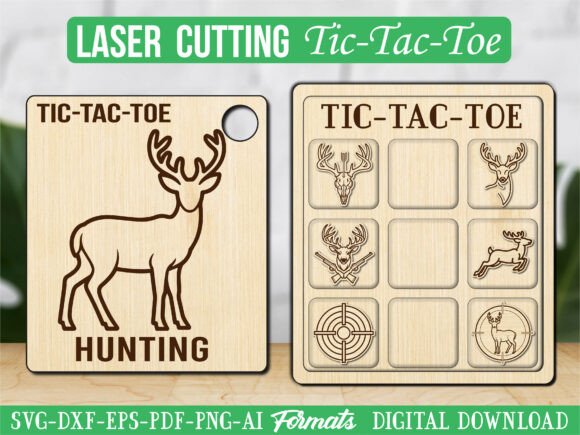
The intersection of traditional woodworking aesthetics and modern digital fabrication has given rise to a new category of functional art, exemplified by the Hunting Deer Tic Tac Toe Puzzle Game SVG. This specific design file serves as more than just a blueprint for a simple game; it represents a versatile asset for makers, educators, and small business owners looking to produce high-quality, thematic keepsakes. Unlike generic geometric patterns, this vector-based design integrates rustic wildlife motifs with precise engineering tolerances, making it an ideal candidate for exploring the capabilities of CO2 and diode laser systems. Understanding the technical nuances of this file type and its physical realization is essential for anyone aiming to transition from digital download to tangible product.
Technical Anatomy of Vector Game Files
When working with a specialized asset like the Hunting Deer Tic Tac Toe Puzzle Game SVG, it is crucial to understand the underlying architecture of the file formats provided. The digital package typically arrives as a ZIP archive containing multiple extensions, each serving a distinct purpose in the fabrication workflow. While SVG (Scalable Vector Graphics) is the native language for most hobbyist lasers like Glowforge or xTool, the inclusion of DXF, EPS, PDF, and PNG files ensures cross-platform compatibility for industrial CNC routers, vinyl cutters, and print-on-demand services.
The integrity of these vector paths determines the success of the final assembly. In this specific design ecosystem, color coding acts as the primary instruction set for the machine controller. Red lines universally designate cut paths, where the laser beam must penetrate the material completely to release the deer tokens or the board perimeter. Conversely, blue lines indicate engraving or scoring operations. These non-penetrating passes create the grid lines and decorative antler details without compromising structural integrity. Maintaining this separation in your design software prevents catastrophic errors, such as accidentally cutting through the game board’s playing surface or failing to detach the game pieces entirely.
Material Selection and Tolerance Management
A common misconception among novice fabricators is that digital files are universally sized. However, the Hunting Deer Tic Tac Toe Puzzle Game SVG relies on kerf compensation and material thickness ratios that must be validated before production. Basswood and Baltic birch plywood are the industry standards for this type of project due to their consistent density and light color, which provides excellent contrast for engraved details. When using hardwoods like walnut or cherry, the increased density may require power adjustments to ensure clean cuts without excessive charring along the red vector lines.
Tolerance is particularly critical for the interlocking elements of puzzle-style games. If the deer tokens are too tight within their storage slots or the board segments do not align flush, the user experience degrades significantly. Professional makers often perform a "kerf test" using a small section of the DXF or SVG file before committing to a full production run. This involves cutting a single token and its corresponding slot to measure the gap. Adjusting the stroke width of the red cut lines in software like Adobe Illustrator or Inkscape by mere fractions of a millimeter can compensate for variations in laser focal width and material swelling caused by humidity.
Educational and Therapeutic Applications
Beyond its aesthetic appeal, this laser cut game file holds significant value in educational and therapeutic settings. For educators and homeschoolers, the tactile nature of a wooden tic tac toe set transforms abstract strategic thinking into a concrete learning experience. The hunting deer theme adds a layer of narrative engagement that generic X and O markers lack, potentially increasing attention span and interest in STEM-related activities involving geometry and spatial reasoning. The physical manipulation of the tokens supports fine motor skill development, making it a dual-purpose tool for cognitive and physical growth.
In occupational therapy and senior care environments, adapted versions of this puzzle game serve as effective tools for maintaining dexterity and cognitive function. The smooth, sanded edges achievable through proper laser cutting and post-processing make the pieces safe and pleasant to handle. Therapists can utilize the familiar rules of tic tac toe to encourage social interaction and memory recall, while the natural wood texture provides sensory grounding. Because the Hunting Deer Tic Tac Toe Puzzle Game SVG allows for customization, caregivers can adjust the size of the tokens or the contrast of the engraved blue lines to accommodate users with visual impairments or limited grip strength, demonstrating the flexibility of digital fabrication in assistive technology.
Commercial Viability for Makers and Artisans
For small business owners and Etsy sellers, this specific design file offers a pathway to product diversification with low overhead. The efficiency of nested vector layouts means multiple game sets can be cut from a single sheet of plywood, maximizing material yield and minimizing waste. The "cute and classic" aesthetic described in the design brief targets a broad demographic, appealing to both outdoor enthusiasts and fans of farmhouse décor. This duality expands the potential customer base beyond niche gaming circles into home goods and gift markets.
However, commercial success requires adherence to licensing terms and quality differentiation. Simply selling the raw cut kit is often insufficient in a saturated market. Successful vendors use the Hunting Deer Tic Tac Toe Puzzle Game SVG as a foundation for value-added products. This might include staining the wood with non-toxic finishes, adding personalized engraving to the board's reverse side, or packaging the set in eco-friendly materials. By treating the digital file as a component rather than the final product, artisans can maintain healthy profit margins while respecting the intellectual property of the original designer. Following the creator’s store for updates also ensures access to fresh designs, keeping inventory relevant and aligned with seasonal trends.
Optimizing the Fabrication Workflow
Achieving professional results with laser cut game files requires a disciplined approach to machine setup and post-processing. The guide accompanying the Hunting Deer Tic Tac Toe Puzzle Game SVG emphasizes the distinction between cutting and engraving, but the order of operations matters equally. Best practice dictates running all blue engrave lines first, followed by red cut lines. This sequence prevents the material from shifting after pieces are released, which would misalign subsequent engravings and ruin the batch. Securing the material with magnets or honeycomb pins further mitigates movement, ensuring that the intricate deer silhouettes remain crisp and centered.
Post-processing is where a factory-made item becomes a handcrafted treasure. Laser-cut wood often exhibits soot marks along the cut edges, particularly on lighter woods. Masking the surface before cutting can reduce cleanup time, but sanding is usually necessary to achieve a premium feel. Starting with 220-grit sandpaper and progressing to 400-grit removes char and smooths any micro-imperfections left by the laser beam. For puzzle games specifically, tumbling the pieces in a rotary tumbler with abrasive media can round sharp corners and create a uniform, worn-in texture that enhances playability. Applying a food-safe oil or wax finish not only protects the wood but also deepens the contrast of the engraved blue lines, making the game board visually striking and durable against frequent handling.
Software Compatibility and File Integrity
Before initiating any project, verifying software compatibility is a mandatory step that prevents frustration and wasted material. While the Hunting Deer Tic Tac Toe Puzzle Game SVG includes widely supported formats like PDF and PNG, not all laser software interprets vectors identically. LightBurn and RDWorks, for example, may handle bezier curves differently than proprietary software like Cricut Design Space or Silhouette Studio. Users should always open the file in their specific software environment to inspect node counts and path continuity. Excessive nodes can slow down processing times and cause jagged movements, while broken paths may result in incomplete cuts.
Furthermore, understanding the difference between raster and vector elements within the provided ZIP archive is vital. The PNG file included is typically a high-resolution preview or a reference image, not a cuttable file. Attempting to trace this raster image manually often yields inferior results compared to using the native SVG or DXF vectors. The pre-drawn vectors have been optimized for laser travel, minimizing head movement and reducing total job time. Respecting the engineered intent of the file ensures that the assembly process remains "fun and easy," as promised in the design description, rather than becoming an exercise in troubleshooting digital artifacts.
Design Versatility and Customization Potential
One of the most significant advantages of acquiring a comprehensive vector pack for this hunting-themed game is the modularity it offers experienced designers. Because the file contains separate layers for cuts and engravings, users can easily modify the aesthetic without altering the functional geometry. A maker could replace the deer silhouette with a different animal or logo while retaining the proven dimensions of the tic tac toe grid and token slots. This adaptability makes the Hunting Deer Tic Tac Toe Puzzle Game SVG a template for endless variations, from corporate promotional items to personalized wedding favors.
This level of customization extends to dimensional scaling as well. Since vectors are resolution-independent, the entire game can be resized to create miniature travel versions or oversized floor games for events. However, when scaling significantly, one must reconsider material thickness and joint tolerances. A 50% reduction in size may require thinner plywood to prevent tokens from becoming too fragile, while a 200% enlargement might necessitate thicker stock to maintain rigidity. Understanding these relationships between digital design and physical constraints empowers creators to innovate responsibly, ensuring that every iteration of the game remains functional, safe, and aesthetically cohesive.