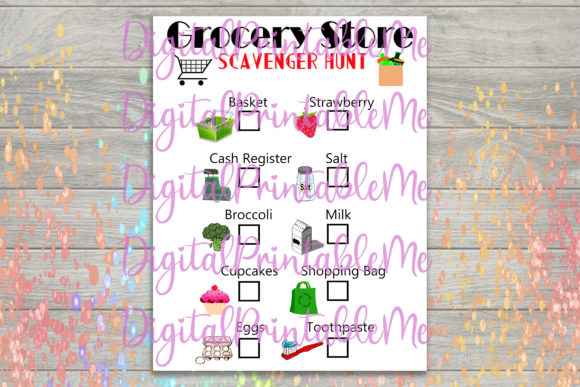
Grocery Store Scavenger Hunt Kids Game: A Practical Tool for Engagement and Planning
Integrating fun and productivity during routine tasks can be a challenge, especially when managing children during a grocery shopping trip. The Grocery Store Scavenger Hunt Kids Game offers a simple yet effective solution by turning a standard shopping errand into an interactive and educational experience. This printable activity is designed to keep children engaged while helping parents complete their shopping tasks efficiently.
What Is the Grocery Store Scavenger Hunt Kids Game?
The Grocery Store Scavenger Hunt Kids Game is a downloadable printable activity that provides a list of items for children to find while in a grocery store. It comes as a high-resolution 300 dpi file in both JPEG and PDF formats, sized at 8.5 x 11 inches for easy printing and use. The game encourages observation, reading, and matching skills while keeping children entertained and involved in the shopping process.
How It Fits Into a Broader Planning Process
For parents and educators, this scavenger hunt is more than just a game—it’s a planning tool that can be used to support time management, task delegation, and engagement during routine activities. Whether used as a pre-shopping warm-up or as a way to structure the shopping trip itself, it integrates naturally into a family’s or educator’s workflow. It also serves as a post-shopping reflection tool, offering a chance to review what was found, how it was found, and what could be improved next time.
Using the Scavenger Hunt Before, During, and After a Shopping Task
One of the strengths of the Grocery Store Scavenger Hunt Kids Game is its flexibility in how and when it’s used. Here’s how it can be integrated into different stages of a shopping trip:
- Before Shopping: Review the list with children, discuss the layout of the store, and set expectations. This helps build anticipation and prepares them for the activity ahead.
- During Shopping: Hand the printed list to your child and let them check off items as you shop. This keeps them focused and actively involved in the process.
- After Shopping: Reflect on the experience. Did they find all the items? What was easy or difficult? This can lead to discussions about planning, organization, and even nutrition.
Integration with Other Tools and Resources
The scavenger hunt works well alongside other planning and organizational tools. For example:
- Pair it with a digital grocery list app to manage adult shopping needs while the child follows their own scavenger list.
- Combine it with a timer or reward system to encourage speed and focus during the shopping trip.
- Use it as part of a broader educational activity, such as a unit on nutrition or budgeting, where real-world application is key.
Its compatibility with both digital and analog planning systems makes it a versatile addition to any family or classroom environment.
Practical Implementation Tips
Here are some tips to help you make the most of the Grocery Store Scavenger Hunt Kids Game in your routine:
- Print and Laminate: For long-term use, print the scavenger hunt on cardstock and laminate it. This allows for repeated use with dry-erase markers.
- Customize: If the printable allows for editing, tailor the list to match your weekly shopping needs or seasonal items.
- Set Clear Goals: Before entering the store, explain the rules and goals of the game to avoid confusion or distractions during the trip.
- Keep It Fun: Use positive reinforcement and praise throughout the trip to maintain engagement and motivation.
- Review and Reflect: After the trip, talk about what went well and what could be adjusted for next time. This helps reinforce planning and problem-solving skills.
Workflow Example: A Family Shopping Routine
Here’s how one family might incorporate the Grocery Store Scavenger Hunt Kids Game into their weekly routine:
- Saturday Morning: The family reviews the shopping list together. The parent prints the scavenger hunt and reviews the items with the children.
- At the Store: Each child gets a copy of the scavenger hunt and a clipboard. They check off items as they’re found, helping the parent locate products efficiently.
- Post-Shop: The family discusses which items were easiest to find and which were tricky. They also talk about how the game helped them stay focused during the trip.
Factors to Consider for Long-Term Use
When integrating the Grocery Store Scavenger Hunt Kids Game into your routine, several factors should be considered to ensure continued effectiveness and usability:
- Preparation: Ensure the game is printed and ready before the shopping trip to avoid last-minute scrambling.
- Compatibility: Check if the game aligns with your child’s age and reading level. Some items may need to be adjusted for younger children.
- Usability: Keep the list clear and easy to follow. Too many items or complex instructions can overwhelm children.
- Organization: Store the printed list in a folder or binder with other activity sheets for easy access.
- Efficiency: Use the game to reinforce time management by setting a goal for how quickly the list can be completed.
- Consistency: Use the game regularly to build familiarity and make it a part of your routine.
- Quality Control: If using a laminated version, check that the writing surface is clean and functional for repeated use.
Adapting the Game for Different Ages and Needs
One of the most valuable aspects of the Grocery Store Scavenger Hunt Kids Game is its adaptability. For younger children, use pictures or simplified words. For older kids, add challenges like finding the best deal or comparing brands. You can even turn it into a team game for siblings or classroom use.
For educators or group leaders, the scavenger hunt can be used during field trips to grocery stores or as part of a nutrition or life skills curriculum. It provides a structured way for children to explore real-world environments while building practical skills.
Final Thoughts: Making Routine Tasks More Engaging
The Grocery Store Scavenger Hunt Kids Game is more than just a distraction—it’s a practical tool that supports planning, engagement, and learning. Whether you're a parent trying to make shopping trips more productive, an educator designing experiential lessons, or a creator looking for family-friendly content, this game offers a simple yet powerful way to integrate fun and learning into everyday life.
By considering how it fits into your existing workflow, customizing it to your needs, and using it consistently, you can transform a routine task into a meaningful and enjoyable experience for both adults and children alike.