CVC Word Board Game: A Strategic Tool for Learning and Engagement
For educators, parents, and learning professionals, the CVC Word Board Game offers more than just entertainment—it provides a structured, engaging way to reinforce foundational literacy skills. Designed for children practicing consonant-vowel-consonant (CVC) words, this game combines movement, visual recognition, and writing practice into a single activity. But beyond its surface appeal, the game holds strategic value when integrated thoughtfully into educational planning, literacy development, and even broader learning frameworks.
Understanding the CVC Word Board Game
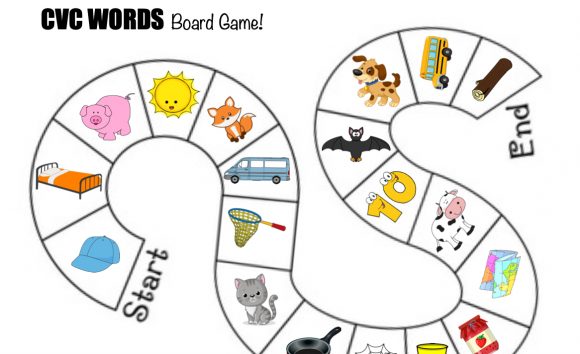
The CVC Word Board Game operates on a simple yet effective premise: players roll a die, move their token across a board, and land on spaces featuring images representing CVC words like "cat," "dog," or "hat." Upon landing on a space, the player must identify the pictured word and then write it down on a provided word list. The game can be played solo or with a partner, with a two-player word list included for shared learning experiences.
What makes this game stand out is its multi-sensory approach. By combining physical movement, visual recognition, verbal articulation, and writing practice, it supports multiple learning modalities. This makes it especially effective for young learners who benefit from varied engagement styles.
Strategic Use in Educational Planning
When used with intention, the CVC Word Board Game can be more than just a literacy activity—it can be a strategic component of a broader learning plan. For educators and curriculum designers, integrating this game into lesson planning allows for a break from traditional drills while maintaining educational rigor.
- Goal Setting: Establish clear learning goals before playing. For example, focus on specific phonics patterns (like short "a" or "i") to align the game with current classroom instruction.
- Progress Tracking: Use the included word lists to monitor progress over time. Reviewing completed lists can help identify which words are consistently mastered or require further reinforcement.
- Blended Learning: Incorporate the game into a rotation of literacy stations, allowing students to experience different types of practice while keeping engagement high.
Supporting Long-Term Literacy Development
One of the most overlooked benefits of the CVC Word Board Game is its potential to support long-term literacy habits. When children associate learning with fun and autonomy, they are more likely to develop a positive attitude toward reading and writing. This is especially important in early education, where motivation and engagement can set the tone for future academic success.
For parents and caregivers, using the game regularly—perhaps as a weekly literacy ritual—can create a sense of continuity and routine. Over time, this builds not only vocabulary but also confidence in decoding and spelling.
When and How to Use the CVC Word Board Game
While the CVC Word Board Game is versatile, it works best when used with a clear purpose. Here are some practical scenarios where it can be particularly effective:
- Reinforcement After Direct Instruction: Use the game after introducing a set of CVC words in class or at home. It allows children to apply what they've just learned in a low-pressure setting.
- Independent Practice: Encourage solo play to build self-direction and accountability. The word list serves as a built-in accountability tool.
- Peer Learning: Pair students strategically—mixing those with varying skill levels can promote peer teaching and collaborative learning.
Before incorporating the game into a learning plan, consider the child's current reading level and familiarity with CVC words. The game is most effective when it aligns with the learner's current stage of phonics development.
Maximizing the Value of Play-Based Learning
Play-based learning is often dismissed as merely recreational, but when approached strategically, it can be one of the most powerful tools for skill acquisition. The CVC Word Board Game exemplifies how play can be purposeful, measurable, and aligned with learning objectives.
To maximize its impact:
- Vary the Challenge: Create custom cards or add-on challenges for advanced learners. For example, ask them to use the word in a sentence or identify rhyming words.
- Integrate with Other Tools: Combine the game with phonics apps, flashcards, or digital writing tools to reinforce learning across multiple formats.
- Reflect and Review: After each session, take a few minutes to review the words written. This reflection helps consolidate learning and identify patterns or gaps.
Avoiding Common Pitfalls
Despite its many benefits, the CVC Word Board Game can lose its effectiveness if used without clear goals or structure. Simply playing the game repeatedly without assessing progress or adjusting difficulty can lead to stagnation or disengagement.
Some common misuses include:
- Using it as a reward without tying it to learning outcomes
- Allowing children to skip writing the words, which undermines the reinforcement aspect
- Playing with words that are too easy or too difficult for the child's current level
To avoid these pitfalls, always pair the game with intentional planning, observation, and follow-up.
Positioning the Game Within a Broader Learning Ecosystem
For educators and learning professionals, the CVC Word Board Game can be part of a larger literacy ecosystem that includes reading instruction, writing practice, phonics drills, and comprehension activities. When positioned correctly, it functions as a bridge between structured learning and independent practice.
Consider how the game can fit into a tiered learning model:
- Direct Instruction: Teacher-led phonics lessons introduce new CVC patterns.
- Guided Practice: Small group or partner work reinforces those patterns with support.
- Independent Practice: The CVC Word Board Game offers a fun, self-directed way to apply learning.
This layered approach ensures that children receive both the structure they need and the autonomy that keeps them motivated.
Conclusion: A Game That Builds More Than Words
The CVC Word Board Game is more than just a literacy tool—it's a strategic resource for building confidence, reinforcing learning, and fostering a love of language. When used with intention, it supports goal-setting, progress tracking, and long-term literacy development. Whether in the classroom, at home, or in a tutoring setting, this game can be a valuable asset when integrated into a well-rounded learning strategy.
By aligning play with purpose, educators and caregivers can ensure that every roll of the die and every word written brings children one step closer to reading fluency and lifelong learning success.